Most blood blisters in the mouth are harmless and heal on their own within 1 to 2 weeks. They usually happen after a small injury, such as biting your cheek, burning your mouth on hot food, or rubbing against a sharp tooth. Keep the area clean, avoid chewing on it, use a cold compress if it swells, and do not pop or drain it yourself. See a dentist or doctor if it lasts longer than about 2 weeks, grows, bleeds repeatedly, or comes with fever, pus, trouble swallowing, or trouble breathing.
The main thing to know: a mouth blood blister is usually a minor injury. Leave it alone, keep your mouth clean, and get it checked if it does not heal or if warning signs appear.
What to Do First
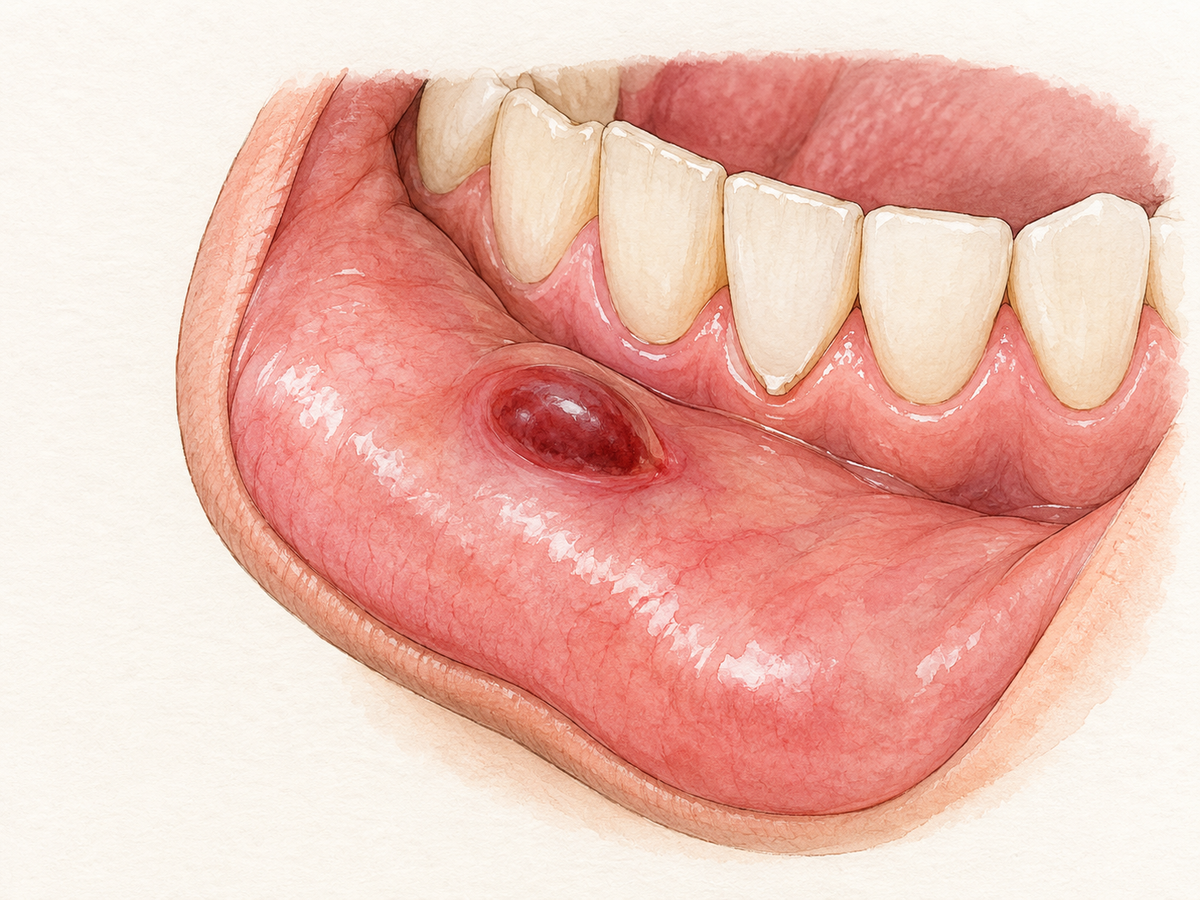
A mouth blood blister is a small collection of blood under the thin lining of the mouth. Most of the time, it starts from local trauma, meaning an injury in one spot from biting, burning, or rubbing.
Here is what to do right away:
- Rinse gently with saltwater after meals to keep the area clean.
- Avoid chewing, poking, or pressing on the blister.
- Use a cold compress — an ice pack wrapped in a cloth — against the cheek or lip for short periods if there is swelling.
- Take an over-the-counter pain reliever if you need one and it is safe for you.
- Do not pop, squeeze, cut, or needle the blister yourself.
Self-drainage increases the chance of bleeding, infection, and delayed healing. In rare situations, a clinician may drain a very large blister, especially if it could affect the airway, but that is not a home remedy. If you notice warning signs, put home care aside and call a dentist or doctor.
What It Is and Whether to Worry
A mouth blood blister is a dark red, purple, or black raised spot. It can form anywhere on the oral mucosa, which is the lining of the mouth. Common spots include the lip, cheek, tongue, gum, and roof of the mouth. The back part of the roof of the mouth is a frequent location for harmless blood-filled blisters, according to clinical reviews of oral blood blisters.
The spot may be painless or a little tender. It can break on its own and leave a shallow open sore, which is called an ulcer. That sore usually heals within a week or two. A benign lesion is a harmless sore or spot, and most mouth blood blisters fall into this category.
You cannot always tell from looking alone whether a spot is harmless. If it persists or looks unusual, a dentist or doctor can check it. Guidance on oral tissue changes says that a sore lasting beyond about 10 to 14 days without a clear diagnosis should be looked at more closely (living evidence-informed guideline).
Common Causes
In most cases, the cause is mild injury to one spot. Common triggers include:
- An accidental bite to the lip, cheek, or tongue.
- Hot food or drink burns, such as hot tea.
- A sharp tooth, rough filling, or crown rubbing the same area.
- Dentures, braces, or retainers that press or create friction.
- Suction or strong pulling forces in the mouth, including from dental procedures, coughing, or sneezing.
- Blood-thinning medications, which may make minor mouth injuries bleed more easily.
These triggers are described in clinical reports on blood-filled mouth blisters. Long-term use of a steroid inhaler has also been linked to a higher chance of mouth blisters in some people (case report on a blood-filled mouth blister).
If you take a blood thinner, you may bleed or bruise more easily after mouth trauma. People on these medicines have a higher bleeding risk after dental procedures, so it is reasonable to be more watchful (review on anticoagulation and dental procedures).
If the same spot is injured again and again, a blister is more likely to return.
Home Management That Works
Most blood blisters need time, not treatment. Your main job is to keep the area clean and avoid irritating it.
- Rinse gently with saltwater: mix about half a teaspoon of salt in a cup of warm water. Do this after meals.
- If your dentist recommends it, use a diluted antiseptic rinse such as chlorhexidine as directed. Chlorhexidine is a germ-killing mouth rinse that can help prevent infection in a healing sore.
- Eat soft, bland foods that are not scratchy, spicy, or acidic.
- Brush carefully around the area to keep your mouth clean.
- Avoid tobacco and alcohol, which can irritate the mouth lining and slow healing.
The most important rule is hands-off care. Do not pop, squeeze, cut, or needle the blister. Breaking it on purpose can lead to bleeding, infection, or slower recovery. A blood blister often ruptures on its own and then heals within about 7 to 14 days, as seen in clinical reports.
Comfort Relief and What to Avoid
To feel more comfortable while it heals:
- Use a cold compress — ice wrapped in a cloth — against the outside of the cheek or lip for 10 to 15 minutes at a time. This can reduce swelling.
- Take an over-the-counter pain reliever if you need one and it is safe for you. Ask a pharmacist or clinician if you take other medicines.
- Do not place aspirin directly on the gum. It can burn or irritate the tissue.
- Use a numbing gel only as directed on the package, and only on intact tissue. Do not use it on an open or infected sore.
Things that can make the area worse:
- Spicy, acidic, crunchy, or very hot foods and drinks.
- Harsh mouthwashes, especially those with high alcohol content.
- Smoking or vaping.
- Poking at the blister with your tongue, fingers, or objects.
If the area feels more painful or looks infected, stop using over-the-counter gels and call a dentist or doctor.
When to See a Dentist or Doctor
Most mouth blood blisters settle down, but there are times to get help.
See a dentist or doctor if the spot:
- Lasts longer than about 2 weeks without improving.
- Gets bigger or spreads.
- Bleeds repeatedly or will not stop bleeding.
- Comes with severe pain, fever, or pus.
- Comes with trouble swallowing, breathing trouble, voice changes, or a feeling that your throat is closing.
- Appears as several blisters at once without an obvious cause.
Some people should seek care sooner. That includes people taking blood thinners, people with weakened immune systems, and people who get repeated unexplained blisters.
Urgent care: If you have trouble breathing, feel like your throat is closing, or have bleeding that will not stop with gentle pressure, call emergency services or go to urgent care. This is rare, but a large blister near the back of the mouth can occasionally affect the airway, so it should not be ignored (oral blood blister review).
If It Keeps Coming Back
A one-time blood blister is usually not a problem. Repeated ones are worth a closer look.
Try these steps:
- Keep a simple note of when blisters appear and what you ate or did beforehand.
- Ask your dentist to check for sharp teeth, rough fillings, or dental appliances that may be rubbing the same spot.
- Review your medicines with a clinician, especially if you take a blood thinner or use a steroid inhaler.
- Ask your dentist or doctor whether a repeat check or lab test is needed.
Recurrent blood blisters can come from ongoing dental irritation. In one case, removing a rough crown and smoothing a sharp tooth stopped the problem for a patient (case report on a rough crown and sharp tooth as triggers). Sometimes the cause is less clear, so a dentist may recommend a fuller evaluation to rule out a bleeding, immune, nutritional, or oral health condition.
Do not keep managing repeated blisters at home indefinitely. If it recurs or worries you, get a professional look.
Questo articolo è stato revisionato da un professionista del settore per garantirne l'accuratezza. Ha scopo puramente informativo ed educativo e non deve sostituire il parere medico, la diagnosi o il trattamento personalizzati. In caso di domande o dubbi sulla propria salute orale, si prega di consultare un dentista, un medico o un altro professionista sanitario qualificato.