
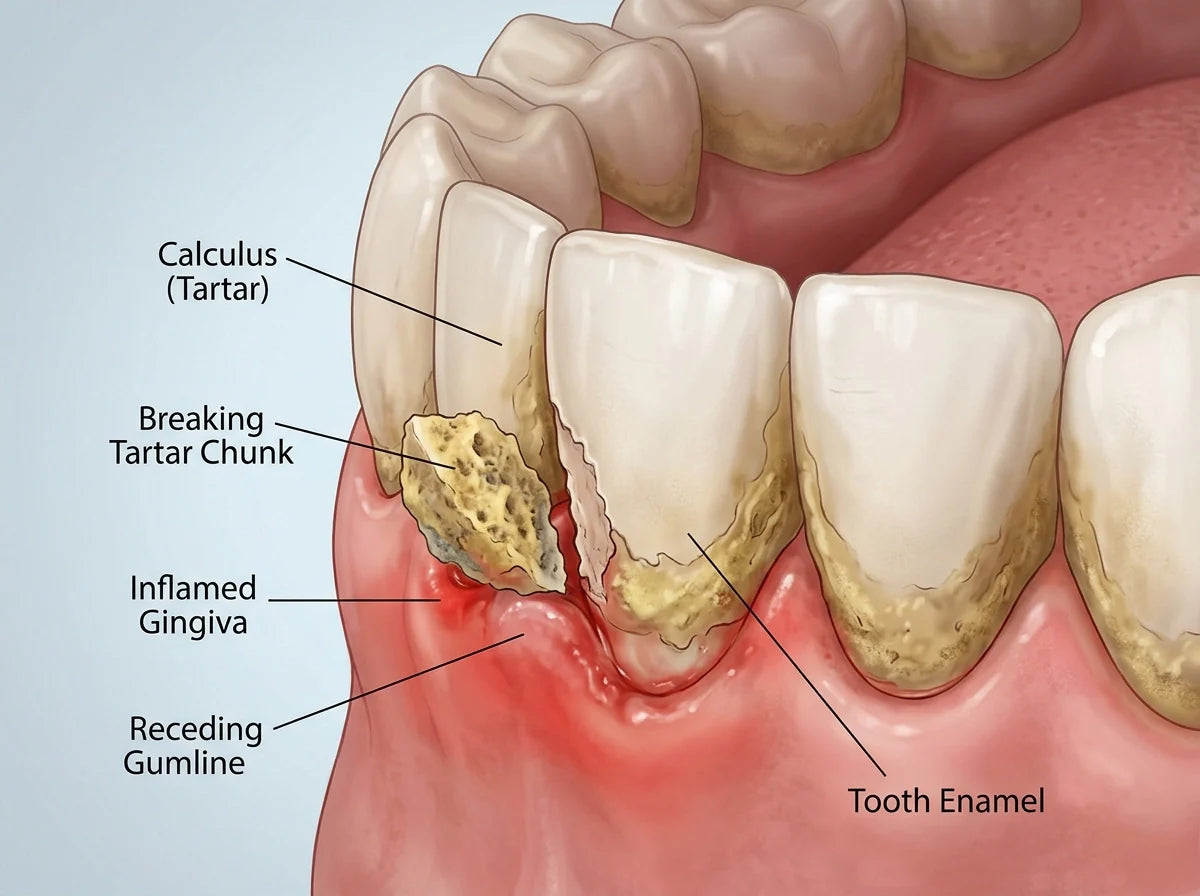
In sintesi: La rottura del tartaro è quasi sempre un segnale di allarme, non un evento positivo. Un pezzo di tartaro (calcolo dentale) che si stacca di solito lascia bordi taglienti, radici sensibili esposte o carie sottostante. Sebbene una piccola scaglia innocua possa a volte staccarsi, la scelta sicura è trattare qualsiasi perdita di tartaro come un motivo per consultare un dentista entro pochi giorni.

È un momento strano, spesso sconcertante: senti qualcosa di duro e granuloso staccarsi da un dente mentre mangi, usi il filo interdentale o semplicemente passi la lingua sulle gengive. Per un secondo, potresti persino pensare: "Bene — quel brutto accumulo è sparito." Ma quel lampo di sollievo è fuori luogo. Un pezzo di tartaro dentale (calcolo) che si stacca da solo è raramente un motivo per festeggiare. È un chiaro segnale che qualcosa era già sbagliato sotto la superficie — e che le cure professionali sono in ritardo.
Perché il Tartaro Non Cadde Dai Denti Sani
Il tartaro dentale non è una crosta sciolta o un po' di sporco che può staccarsi. È placca calcificata — un biofilm mineralizzato che si fonde strettamente alla superficie del dente. Mentre la placca dentale è una pellicola morbida e appiccicosa che puoi spazzolare via, una volta che si indurisce in tartaro, diventa un deposito simile a cemento che si lega chimicamente allo smalto. Questo attaccamento è così forte che il tartaro non può essere rimosso con spazzolatura regolare o filo interdentale; solo un professionista dentale può rimuoverlo in sicurezza.
Quindi quando un pezzo si stacca senza strumenti professionali, qualcosa deve cedere. Di solito, il tartaro è cresciuto così spesso che una forza meccanica (come un morso duro o filo interdentale aggressivo) lo frattura, oppure la struttura del dente sottostante è già stata indebolita da carie o perdita ossea da parodontite. In entrambi i casi, l'evento indica un problema preesistente, non un miglioramento improvviso.
Poiché il tartaro inizia a formarsi entro ore dalla spazzolatura mancata e può mineralizzarsi completamente in pochi giorni, la prevenzione è tutto. Usare uno spazzolino elettrico può aiutarti a ottenere una pulizia più accurata ogni giorno, riducendo la placca che alla fine si indurisce in calcolo.
Buon Segno o Campanello d'Allarme? Una Rara Eccezione
C'è uno scenario in cui una minuscola scaglia superficiale di tartaro potrebbe scheggiarsi durante l'uso del filo interdentale senza causare danni. Questo può accadere quando il deposito si trova proprio sul bordo gengivale, non si è ancorato profondamente nello smalto e si stacca in modo pulito — lasciando una superficie liscia e nessun dolore. Tuttavia, questa è l'eccezione, non la regola.
La maggior parte delle volte, il tartaro che si stacca lascia dietro di sé: - Bordi taglienti che possono tagliare lingua o guancia - Superfici di dentina o radici esposte che sono estremamente sensibili a freddo, caldo e pressione - Una texture ruvida, simile a un cratere che intrappola la placca ancora più aggressivamente - Sanguinamento o dolorabilità persistente — segni di infiammazione attiva gengivite o infezione più profonda
Uno studio fondamentale che utilizzava la visualizzazione endoscopica ha scoperto che il 70% delle tasche gengivali infiammate era direttamente associato a depositi di tartaro visibili, non solo a batteri, suggerendo che il tartaro stesso guida l'infiammazione. Se l'area in cui si è staccato il tartaro è rossa, gonfia o sanguina, dovresti presumere che il tessuto sottostante non sia sano.
Come capire se era tartaro o un dente rotto: Un frammento di tartaro è di solito giallastro o brunastro, può sbriciolarsi quando viene premuto e risulta leggermente più morbido dello smalto. Un frammento di dente è duro, lucido, bianco o biancastro, e potrebbe ricomporsi sul dente come un pezzo di puzzle. Se non sei sicuro, trattalo come un'emergenza odontoiatrica.
Danni nascosti che non vedi ancora
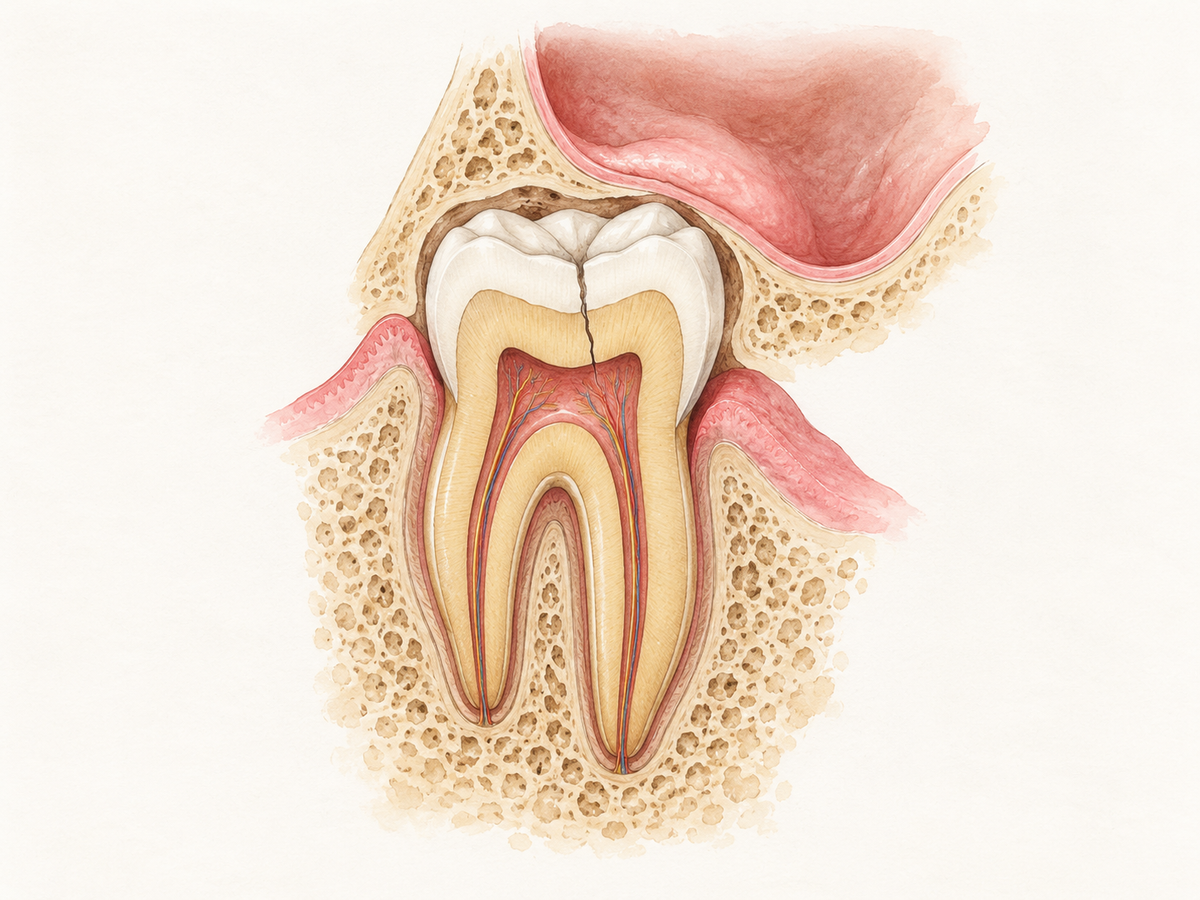
Il pezzo che si è staccato è spesso solo la punta dell'iceberg. Il tartaro sottogengivale — il calcolo che si accumula sotto il bordo gengivale — può creare tasche profonde dove i batteri prosperano, erodendo il legamento e l'osso che tengono in posizione il dente. Quando un pezzo visibile si stacca di colpo, può essere un avvertimento che le strutture di supporto sono già compromesse.

La ricerca mostra sempre più che il tartaro è più di una trappola passiva per la placca. Una revisione narrativa del 2022 ha notato che anche particelle di tartaro sterile possono causare la morte cellulare nelle cellule epiteliali orali, potenzialmente rompendo la barriera protettiva della tasca gengivale. Ciò significa che la superficie ruvida e fratturata lasciata dopo il distacco di un pezzo non è solo fastidiosa — promuove attivamente un'ulteriore distruzione dei tessuti. Se la parodontite si è già instaurata, la superficie radicolare esposta diventa una calamita per il riaccumulo, accelerando la malattia.
Senza intervento, il tartaro sottogengivale rimanente può portare a: - Continua recessione gengivale - Perdita di osso alveolare e mobilità dentale - Infezione che raggiunge la polpa (richiedendo trattamento canalare) - Perdita del dente alla fine
La buona notizia: cogliere il problema ora, quando un pezzo si è appena staccato, ti dà un vantaggio. È un allarme precoce che ti porta sulla poltrona del dentista prima che si verifichino danni irreversibili.
Cosa fare subito (e cosa non fare)
Le tue azioni immediate contano. Ecco come gestire la situazione in sicurezza:
- Sciacqua delicatamente con acqua salata tiepida (mezzo cucchiaino di sale in una tazza d'acqua) per mantenere pulita la zona.
- Evita di sondare la zona con la lingua, uno stuzzicadenti o qualsiasi strumento. Il contatto può introdurre batteri più in profondità nella tasca gengivale o fratturare ulteriormente il tartaro rimanente.
- Non tentare mai di staccare altro tartaro con l'unghia, un pick dentale o qualsiasi strumento domestico. La rimozione fai-da-te del tartaro può scheggiare lo smalto sano, causare tagli profondi e spingere batteri nel flusso sanguigno.
- Copri i bordi taglienti con cera dentale senza zucchero (disponibile nella maggior parte delle farmacie) per proteggere lingua e guancia mentre aspetti l'appuntamento.
- Prenota una visita dal dentista entro pochi giorni. La superficie ruvida lasciata è un rifugio perfetto per nuova placca dentale, quindi una rapida levigatura professionale è essenziale.
Sebbene nessuno spazzolino possa rimuovere il tartaro consolidato, passare a uno spazzolino elettrico sonico può pulire i denti in modo delicato ma efficace, aiutandoti a evitare lo strofinamento aggressivo che potrebbe staccare altro tartaro o irritare le gengive già infiammate.
Come un dentista risolverà il problema in sicurezza
Se il pensiero di una visita dal dentista ti rende nervoso, stai tranquillo: trattare il tartaro rotto è una procedura di routine, ben compresa. Il processo è delicato, prevedibile e molto più confortevole che affrontare le conseguenze della negligenza.
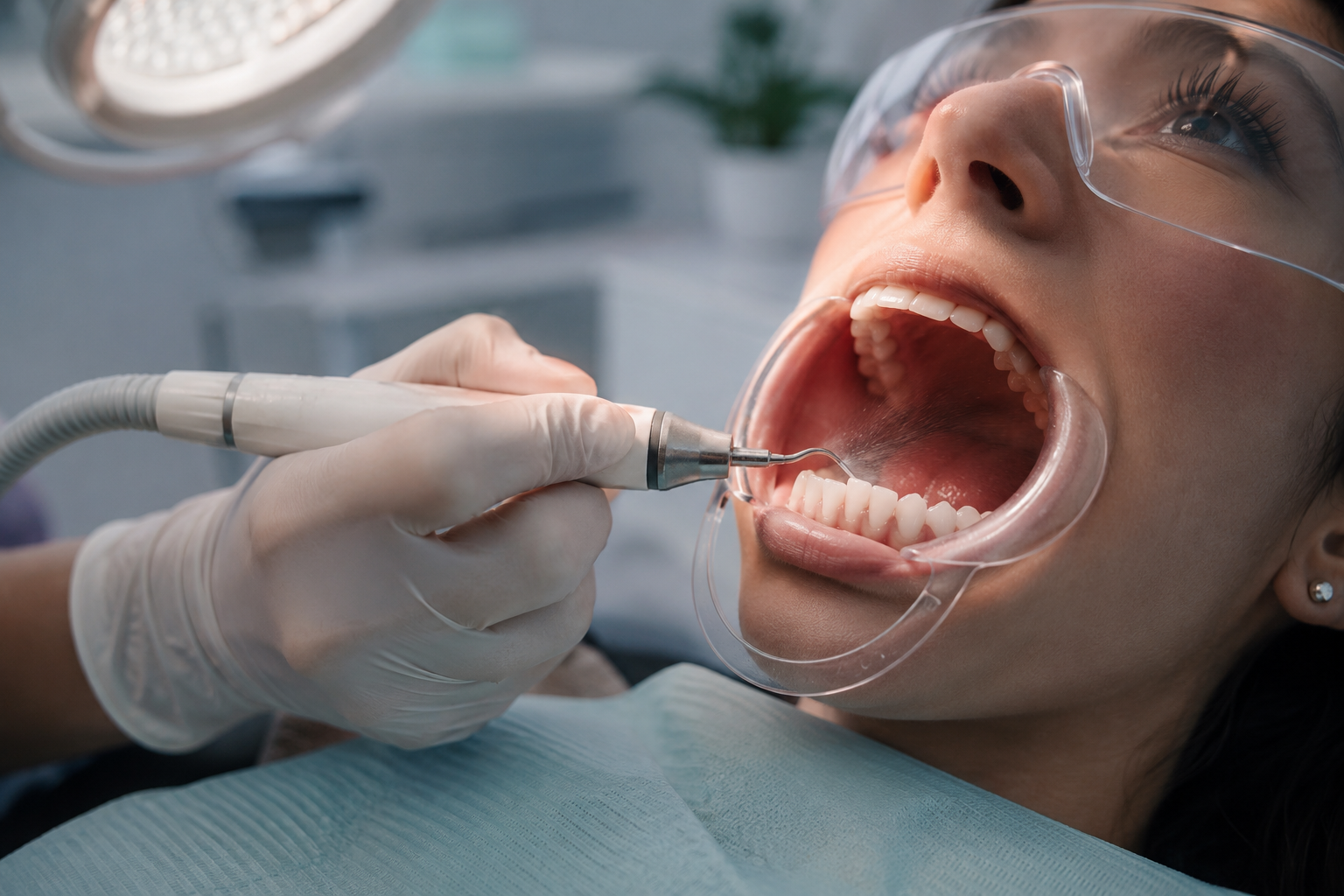
Durante l'appuntamento, il dentista o l'igienista: - Esaminerà l'area con una sonda parodontale e probabilmente farà una radiografia per valutare l'estensione del tartaro sotto la linea gengivale e verificare la perdita ossea - Rimuoverà il tartaro sopra e sotto gengivale rimanente con ablatore ultrasonico e strumenti manuali — questa è la pulizia dentale professionale (ablazione del tartaro) che ripristina una superficie dentale liscia e pulita - Tratterà eventuali carie o tasche gengivali che potrebbero essere state nascoste sotto il tartaro - Luciderà il dente per rallentare l'accumulo futuro di placca
Secondo le linee guida della pratica clinica, l'ablazione del tartaro e la levigatura radicolare (SRP) è la terapia iniziale gold standard per la parodontite, controllando efficacemente l'infiammazione e fermando la progressione della malattia. Se affronti il problema presto, il trattamento è spesso rapido, minimamente invasivo e coperto dalla maggior parte dei piani assicurativi dentali.
Lungi dall'essere un evento spaventoso, quel pezzo di tartaro rotto era il modo del tuo dente di avvisarti — prima che un problema minore diventasse uno maggiore. Prendendolo seriamente ora, scegli di proteggere il tuo sorriso con una soluzione professionale veloce che previene dolore, infezione e perdita dei denti in futuro.





Commenta
Questo sito è protetto da hCaptcha e applica le Norme sulla privacy e i Termini di servizio di hCaptcha.