
TL;DR: Fumare non solo macchia i denti di giallo — priva le gengive di ossigeno, erode silenziosamente l'osso che tiene i denti al loro posto, e aumenta notevolmente il rischio di un cancro orale mortale. La parte più incoraggiante? I danni possono essere fermati e in gran parte invertiti quando smetti, iniziando con una visita dal dentista e una routine di igiene orale più efficace.

La maggior parte dei fumatori lo nota durante lo spazzolamento mattutino: una pellicola giallo-marrone opaca che non si rimuove con lo strofinio, denti che sembrano quasi ruvidi o pelosi, e un sapore stantio persistente. Questi cambiamenti visibili spesso provocano profondo imbarazzo — il desiderio di nascondere il sorriso, di voltarsi nelle foto. Ma quella scoloritura non è solo un fastidio estetico. È il primo segno esteriore di una serie di danni all'interno della bocca che, se non controllati, possono portare alla perdita dei denti e a malattie mortali.
Le macchie che vedi — e quelle che preparano il terreno a cose peggiori
La classica tonalità giallo-marrone dei denti del fumatore denti del fumatore deriva da catrame e nicotina. Il catrame, il residuo appiccicoso della combustione del tabacco, ricopre immediatamente la superficie del dente e si assorbe rapidamente nei pori microscopici dello smalto. La nicotina, sebbene incolore quando è fresca, si ossida a contatto con l'aria e si trasforma in un pigmento marrone scuro ostinato che si lega chimicamente a quegli stessi pori dello smalto.
Con il tempo, questa combinazione crea macchie estrinseche che si induriscono in tartaro (calcificazione) scuro e ruvido tartaro (calcolo) lungo il bordo gengivale e tra i denti — specialmente sul lato linguale dei denti anteriori inferiori e sul lato buccale dei molari superiori. I fumatori notano spesso che la superficie dei loro denti si sente permanentemente ruvida, indipendentemente da quanto a lungo si lavino. Quella consistenza è il tartaro, che agisce come una calamita per ulteriori macchie e placca, e non può essere rimosso a casa.
Oltre al colore, c'è l'alito. Alitosi nei fumatori è il risultato diretto di particelle di fumo, composti solforati e una crescita eccessiva di batteri che causano odori e che prosperano nell'ambiente secco e favorevole alla placca creato dal tabacco. Anche mentine e collutori mascherano solo il problema per qualche minuto.
La battaglia quotidiana contro queste macchie superficiali sembra estenuante, ma gli strumenti giusti contano. Mentre uno spazzolino manuale spesso fa fatica a raggiungere gli angoli dove si deposita il catrame, uno spazzolino elettrico con il suo movimento di pulizia ad alta frequenza può rompere e spazzare via in modo più efficace la placca che causa macchie prima che si calcifichi — dandoti una possibilità concreta contro quella scoloritura quotidiana.
Il danno nascosto: quando le tue gengive smettono di avvisarti
Sotto quelle macchie visibili, il fumo orchestra un processo silenzioso e molto più pericoloso. Ecco la parte che la maggior parte dei fumatori non conosce — e che potrebbe salvare i loro denti.
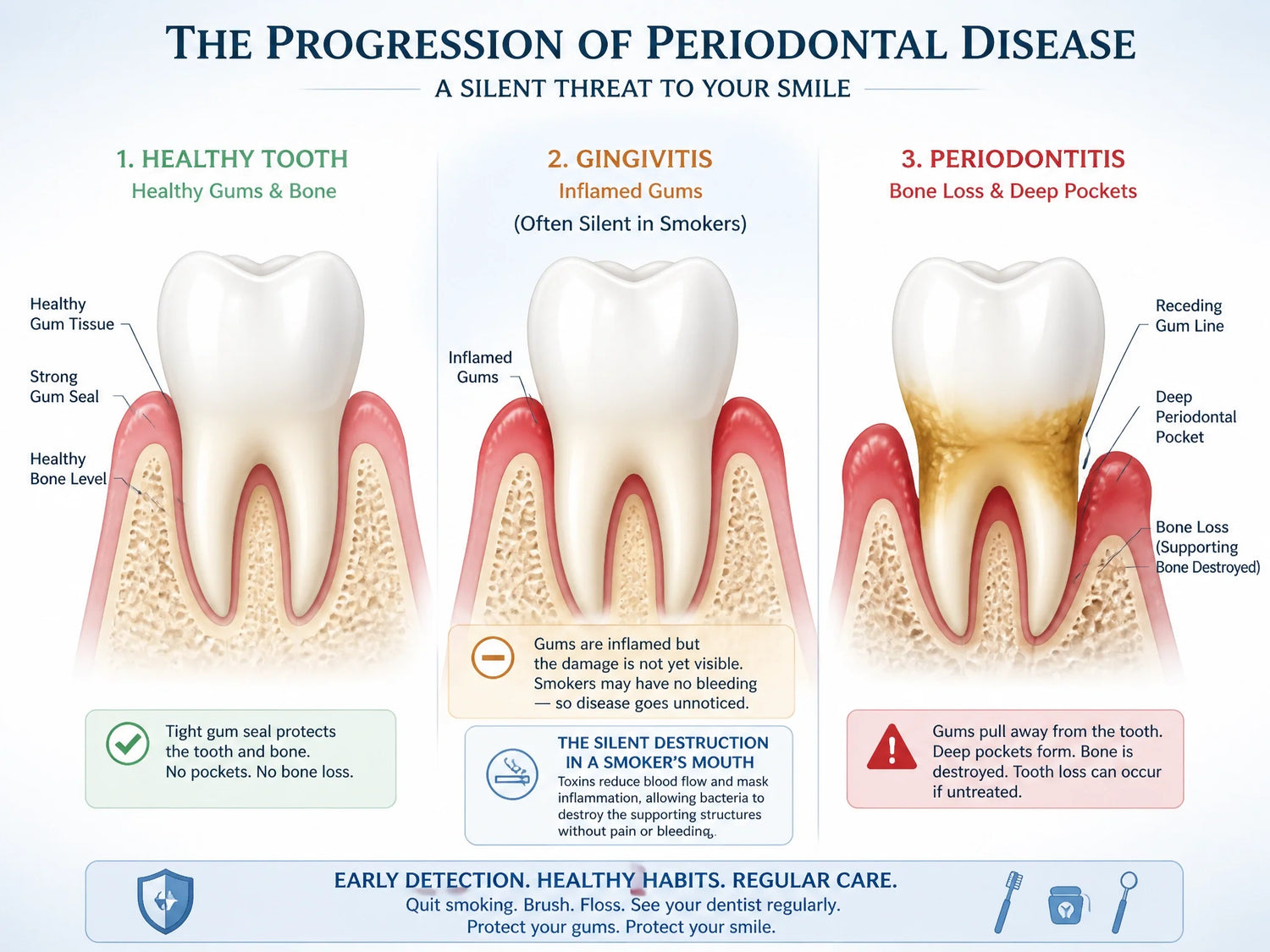
Le gengive sane sanguinano quando sono infiammate. Quel sanguinamento è una bandiera rossa, un avvertimento precoce che gengivite (infiammazione gengivale) è presente. Ma la nicotina restringe i vasi sanguigni in tutto il corpo, inclusi i minuscoli capillari nelle tue gengive. Questa vasocostrizione priva il tessuto gengivale di ossigeno e nutrienti essenziali — e maschera il sanguinamento che normalmente segnala un problema.
Di conseguenza la malattia parodontale progredisce senza dolore. Uno studio di coorte rappresentativo a livello nazionale che ha seguito migliaia di adulti statunitensi ha rilevato che i fumatori di sigarette attuali avevano un rischio maggiore del 33% di ricevere una diagnosi di malattia gengivale e un rischio maggiore del 35% di sviluppare denti mobili rispetto ai non fumatori. I numeri sono ancora più netti per la perdita dei denti: I dati NHANES mostrano che i fumatori attuali hanno oltre il doppio delle probabilità di perdere i denti, con una prevalenza di perdita dei denti del 17,5% rispetto a poco meno del 7% tra i non fumatori.
Il danno si manifesta al rallentatore:
- Le fibre che ancorano i denti all'osso (legamento parodontale) vengono distrutte.
- L' osso alveolare che sostiene le radici si riduce, creando tasche profonde che intrappolano più batteri.
- Le gengive si ritirano gradualmente, esponendo le superfici radicolari scure, che sono più morbide dello smalto e altamente soggette a carie (carie radicolari).
). - Alla fine, i denti si allentano e possono richiedere l'estrazione, spesso senza alcun dolore pulsante fino alla fine.
Poiché i fumatori raramente vedono sangue sul filo interdentale o sullo spazzolino, sono indotti a un falso senso di sicurezza. Nel frattempo, la malattia sta silenziosamente smantellando le fondamenta di ogni dente.
È qui che la tua tecnica di spazzolamento diventa criticamente compensativa. Poiché il fumo nasconde il sanguinamento rivelatore, non puoi fare affidamento sul dolore per sapere se stai pulendo abbastanza bene. Uno spazzolino elettrico — in particolare uno con sensore di pressione e modalità cura delle gengive — aiuta a fornire una pulizia costante, simile a quella del dentista, lungo il margine gengivale, rimuovendo il biofilm di placca che alimenta la parodontite anche quando le gengive non inviano segnali di dolore.

La connessione con il cancro: cosa potrebbe significare davvero quella piaga
È lo scenario peggiore che ogni fumatore spera di evitare, ma deve conoscere. Il tabacco è la causa principale del cancro orale, una malattia che uccide oltre 175.000 persone a livello globale ogni anno.
Una revisione sistematica e meta-analisi di decine di migliaia di pazienti ha confermato che i consumatori di tabacco — sia che fumino sigarette o masticino tabacco — hanno probabilità drammaticamente più elevate di sviluppare tumori maligni orali e lesioni pre-maligne. Le sostanze chimiche cancerogene nel fumo di tabacco, in particolare nitrosammine specifiche del tabacco (TSNA), si legano direttamente al DNA delle cellule che rivestono la bocca, formando addotti che possono innescare una crescita cellulare incontrollata.
E il pericolo non è limitato ai fumatori accaniti di lunga data. Anche il fumo occasionale o sociale espone i tessuti orali a questi stessi cancerogeni, e il rischio aumenta con ogni sigaretta.
I primi segni del cancro orale sono spesso indolori e facili da trascurare, il che li rende così letali. Fai attenzione a:
- Una piaga o ulcera in bocca o sul labbro che non guarisce entro due settimane
- Una macchia bianca (leucoplachia) o rossa (eritroplachia) su gengive, lingua o rivestimento interno delle guance
- Un nodulo o ispessimento in qualsiasi punto della bocca o del collo
- Difficoltà a masticare, deglutire o parlare
- Intorpidimento della lingua o della bocca
Se noti uno qualsiasi di questi sintomi, consulta immediatamente un dentista o un medico. La diagnosi precoce porta i tassi di sopravvivenza oltre l'80%.
È anche fondamentale sapere che altre forme di tabacco non sono più sicure. Sigari, pipe e persino prodotti senza fumo come lo snus comportano i propri rischi di cancro orale e possono causare stomatite nicotinica (un aspetto bianco a ciottoli sul palato) e melanosi del fumatore (macchie scure sulle gengive).
Il tuo percorso di recupero: un piano che inizia oggi
Se quello che hai letto ti sembra pesante, tieni presente questo: la bocca ha una straordinaria capacità di guarire una volta rimossa la fonte del danno. Il tuo percorso verso un sorriso più sano inizia con quattro passaggi chiari.
-
Prenota un esame dentistico completo.
Il tuo dentista misurerà la profondità delle tasche gengivali, controllerà la presenza di lesioni sospette e farà radiografie per vedere la perdita ossea che non puoi sentire. Questo esame stabilisce la tua linea di base e individua subito qualsiasi cosa preoccupante. -
Rimuovi il catrame e il tartaro che la cura a casa non può toccare.
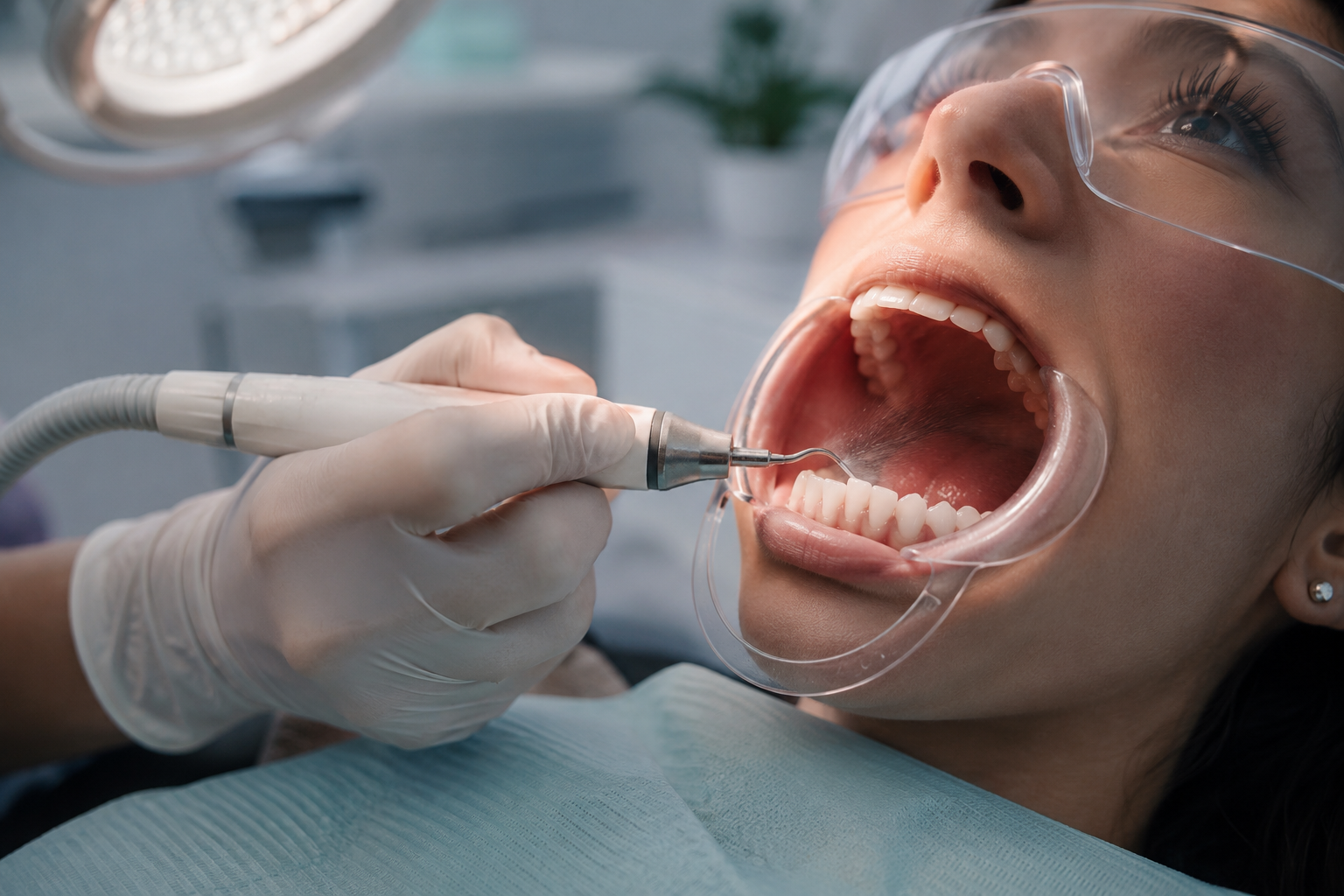
Una pulizia dentale professionale (ablazione) rimuoverà anni di macchie indurite e calcolo. Per le macchie estrinseche ostinate, la terapia "airflow" o la microabrasione possono lucidare delicatamente la scoloritura senza danneggiare lo smalto. Evita i dentifrici sbiancanti abrasivi da banco: non penetrano le macchie profonde di catrame e potrebbero peggiorare la sensibilità. -
Smetti di fumare, e non farlo da solo.
Questa è l'azione singola più potente che puoi intraprendere per la tua bocca e per la tua vita. Le prove sono sorprendenti: una meta-analisi di studi prospettici ha mostrato che le persone che smettevano di fumare riducevano il rischio di parodontite quasi allo stesso livello dei non fumatori, e nei successivi 12-24 mesi, hanno guadagnato significativamente più attacco (le fibre che tengono i denti) e tasche più superficiali dopo il trattamento rispetto a coloro che continuavano a fumare. Strumenti gratuiti come la National Quitline (1-800-QUIT-NOW) e le app per smettere di fumare possono raddoppiare le tue possibilità di successo. -
Mantieni il risultato con abitudini basate sulla scienza.
Una volta smesso, usa un collutorio antibatterico senza alcol, spazzola delicatamente due volte al giorno con un dentifricio al fluoro e pulisci tra i denti ogni giorno. Torna per la pulizia di mantenimento parodontale ogni 3-4 mesi: le tue gengive hanno bisogno di un supporto professionale più frequente per rimanere stabili.
Che cosa significa un miglioramento? Il sanguinamento gengivale durante lo spazzolamento , un segno sano del ritorno della circolazione, spesso ricompare entro 2-12 settimane dallo smettere. L'infiammazione visibilmente regredisce, i denti sembrano più lisci e l'alito si rinfresca. Con il passare dei mesi e degli anni, il rischio di perdita catastrofica di denti diminuisce considerevolmente.
Se le macchie persistono dopo aver smesso, lo sbiancamento professionale in studio può schiarire in sicurezza anche la decolorazione più profonda sotto la supervisione di un dentista. E per i denti già persi, le attuali opzioni di impianti e ponti sono molto più prevedibili in una bocca libera dal fumo.
Lo specchio non deve essere il tuo nemico. Può diventare la prova che il cambiamento è reale. Lo stigma giallo-marrone, la consistenza ruvida, la paura di una lesione nascosta: tutto può iniziare a regredire con una decisione. Fissa quell'appuntamento dal dentista questa settimana. I tuoi denti sono pronti per una seconda possibilità.




Commenta
Questo sito è protetto da hCaptcha e applica le Norme sulla privacy e i Termini di servizio di hCaptcha.